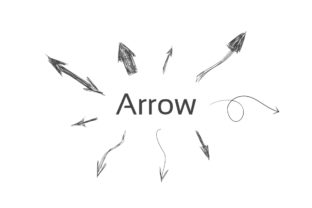
Arrow Drawing 8: A Vector Illustration for Modern Web Design
In the evolving landscape of web design, visual elements play a crucial role in guiding user interaction and enhancing aesthetic appeal. Among these, arrow illustrations have become a staple for conveying direction, flow, and intent. Arrow Drawing 8 is a standout example of this trend, offering a refined set of arrows that seamlessly integrate into digital projects. As designers and developers seek clarity and consistency in their work, the relevance of such vector illustrations continues to grow.
The Rise of Visual Direction in Web Design
Modern web design prioritizes intuitive navigation and user engagement. Arrows serve as subtle yet powerful tools for directing attention and signaling movement. Whether it’s guiding users through a multi-step form, highlighting a call-to-action, or indicating scroll direction, arrows help create a more cohesive experience. Arrow Drawing 8 reflects this need by providing a versatile collection of sketches that cater to various design contexts.
As more businesses shift toward digital-first strategies, the demand for high-quality, adaptable visuals has never been higher. The Set of arrows of sketches for web design offers a solution that balances functionality with creativity. These vector illustrations are not just decorative—they’re essential components of a well-structured interface.
Why Arrow Drawing 8 Stands Out
What sets Arrow Drawing 8 apart is its balance of simplicity and sophistication. Each arrow in the set is crafted with precision, ensuring clarity without overwhelming the viewer. This makes it ideal for both minimalist and complex design schemes. The use of clean lines and consistent styling allows for easy integration across different platforms and applications.
Moreover, the vector format ensures scalability without loss of quality. This is particularly important in responsive web design, where elements must adapt to various screen sizes and resolutions. By using Arrow Drawing 8, designers can maintain visual integrity across devices, enhancing the overall user experience.
Arrow Drawing 8 in the Context of Current Trends
Today’s design trends emphasize accessibility, inclusivity, and efficiency. Arrows contribute to these goals by making interfaces more navigable and understandable. As remote work and online interactions become the norm, the need for clear visual cues has increased. Arrow Drawing 8 aligns with these shifts, offering a tool that supports both usability and aesthetics.
Additionally, the trend toward flat design and minimalism has influenced the way arrows are used. Rather than being ornate or overly stylized, modern arrows tend to be straightforward and functional. Arrow Drawing 8 embodies this approach, delivering a set that feels contemporary while remaining timeless.
How Arrow Drawing 8 Reflects Changing User Expectations
User expectations have evolved alongside technological advancements. Today’s audiences demand seamless experiences, with little tolerance for confusion or ambiguity. Arrows help bridge this gap by providing instant visual feedback. For instance, an arrow pointing downward can signal that more content is available, encouraging users to explore further.
This subtle guidance is especially valuable in mobile-first design, where space is limited and every element must serve a purpose. Arrow Drawing 8’s clean, scalable format makes it a reliable choice for designers looking to enhance user navigation without cluttering the interface.
The Practical Implications of Using Arrow Drawing 8
For professionals in web design, marketing, and digital strategy, the practical benefits of Arrow Drawing 8 are significant. The set allows for quick implementation across multiple projects, saving time and effort. Instead of creating custom arrows from scratch, designers can leverage this pre-designed collection to maintain consistency and efficiency.
Businesses can also benefit from using Arrow Drawing 8 to reinforce brand identity. Consistent visual elements, including arrows, contribute to a stronger brand presence. By incorporating these illustrations into websites, apps, and promotional materials, companies can create a unified look that resonates with their audience.
Real-World Applications of Arrow Drawing 8
Consider a scenario where a designer is working on an e-commerce platform. The use of arrows in product categories, navigation menus, and checkout flows can significantly improve the user journey. Arrow Drawing 8 provides a range of options that fit seamlessly into these contexts, ensuring a smooth and intuitive experience.
Another example is in educational websites or online courses. Arrows can be used to indicate progress, highlight key sections, or guide learners through interactive content. The Set of arrows of sketches for web design offers flexibility, allowing educators to tailor the visuals to their specific needs.
Adapting to New Workflows and Creative Practices
As creative workflows continue to evolve, the need for adaptable resources becomes more apparent. Arrow Drawing 8 supports this shift by offering a set that can be easily modified and customized. Designers can adjust colors, sizes, and styles to match their project requirements, ensuring that the arrows remain relevant and effective.
This adaptability is especially useful in collaborative environments, where multiple stakeholders may have different preferences. By using a standardized set like Arrow Drawing 8, teams can streamline their design process and reduce the risk of inconsistencies.
Embracing the Future of Digital Design
The future of web design will likely involve even greater emphasis on user-centric approaches and efficient visual communication. As technology advances, the role of arrows and other directional elements will only become more prominent. Arrow Drawing 8 is well-positioned to meet these demands, offering a resource that is both forward-thinking and practical.
For creators and professionals, staying ahead of these trends means embracing tools that support innovation and efficiency. Arrow Drawing 8 is not just a set of illustrations—it’s a strategic asset that can enhance the effectiveness of digital projects across industries.